Time Pledged for Service: Jasper County's Women's Committee Census Collection (Because AI isn't in all the archives...)
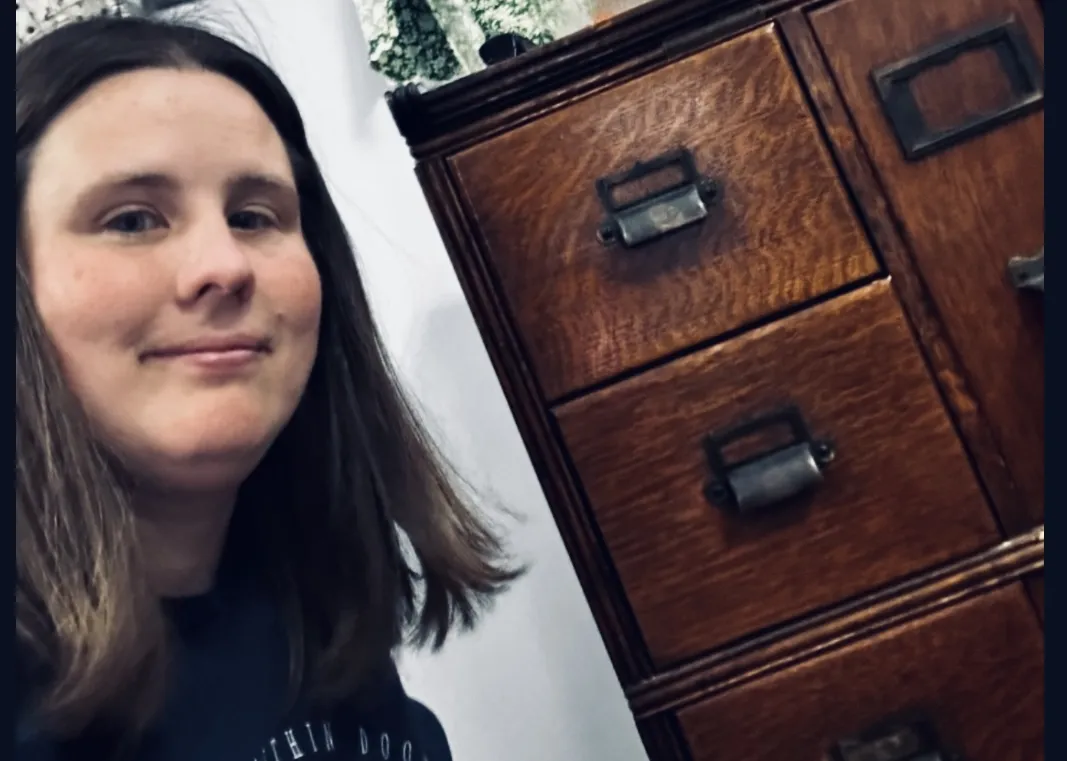
Years ago, while finishing my history BA, I volunteered at the Jasper County (Indiana) Historical Society. A gorgeous wooden cabinet full of registration cards sat in an obscure corner of a back room. The cards were a detailed survey of Jasper County women in 1918, but no one then at the JCHS knew anything about them. I was already immersed (a nice way to say swamped) in another research project involving a nineteenth-century family in Union County, Indiana; I knew I could not tackle both the cards and the Union County project before graduation. After finishing at Purdue, I stepped away from research to start a family. These were the right personal choices, but I felt historian guilt. When I returned to grad school, one assignment was to create an exhibit of sorts and a bibliography surrounding a small collection. I knew immediately where to look.
A new genealogist, Sue Caldwell, joined the JCHS in the years I was away. Like me, she found the cards in a backroom and became curious. Connecting them with the Women’s Committee of National Defense (the Indiana branch of the national committee), Sue found not just the cards, but the original instructions for collecting the census and correspondences related to the project. These cards, arranged alphabetically (we will return to this later), were filled out by almost all women in Jasper County during the spring and early summer of 1918. They are a census record women’s lives/family, work abilities, and volunteer service. Sue worked with FamilySearch to get the cards scanned and also started an Excel spreadsheet so the cards can be searched. It is not done yet, but it is a wonderful beginning. I added in hundreds of cards during this project and am so grateful Sue launched it.
While there is now widespread recognition that women’s history connects with all history, it can still be difficult to access private women’s stories from the past. These cards a special kind of key, allowing us entry into this private world. With over 3,000 women represented in the collection, working with them is like wielding a fire hose. Developing a research process and determining the best way to build a supportive collection took particular care and thought. It would have been easy to focus on the upper levels of the Women’s Committee in Jasper County. For instance, Ora Thompson Ross, a University of Michigan graduate and head of the Jasper County Committee is a women easy to spend research resources on. Her story is valuable, too; she sat on the board of the Rensselaer Library for years in the early 1900s. She possessed education and agency that surprise many modern Americans who have only vague impressions of this time period, although her own community accepted women in these roles. Even with this truth, though, focusing on her story at the expense of other women is unfair representation. I wanted this project to honor all the women of Jasper County in 1918, not only the college educated ones (who were a minority). Ross deserved to be included, but I also needed a strategy for sharing a better cross-section of Jasper County women in 1918…